Blog
Product Launch | Star Arm 102: Open-Source 6+1 DOF Teleoperation Robotic Arm for Embodied AI

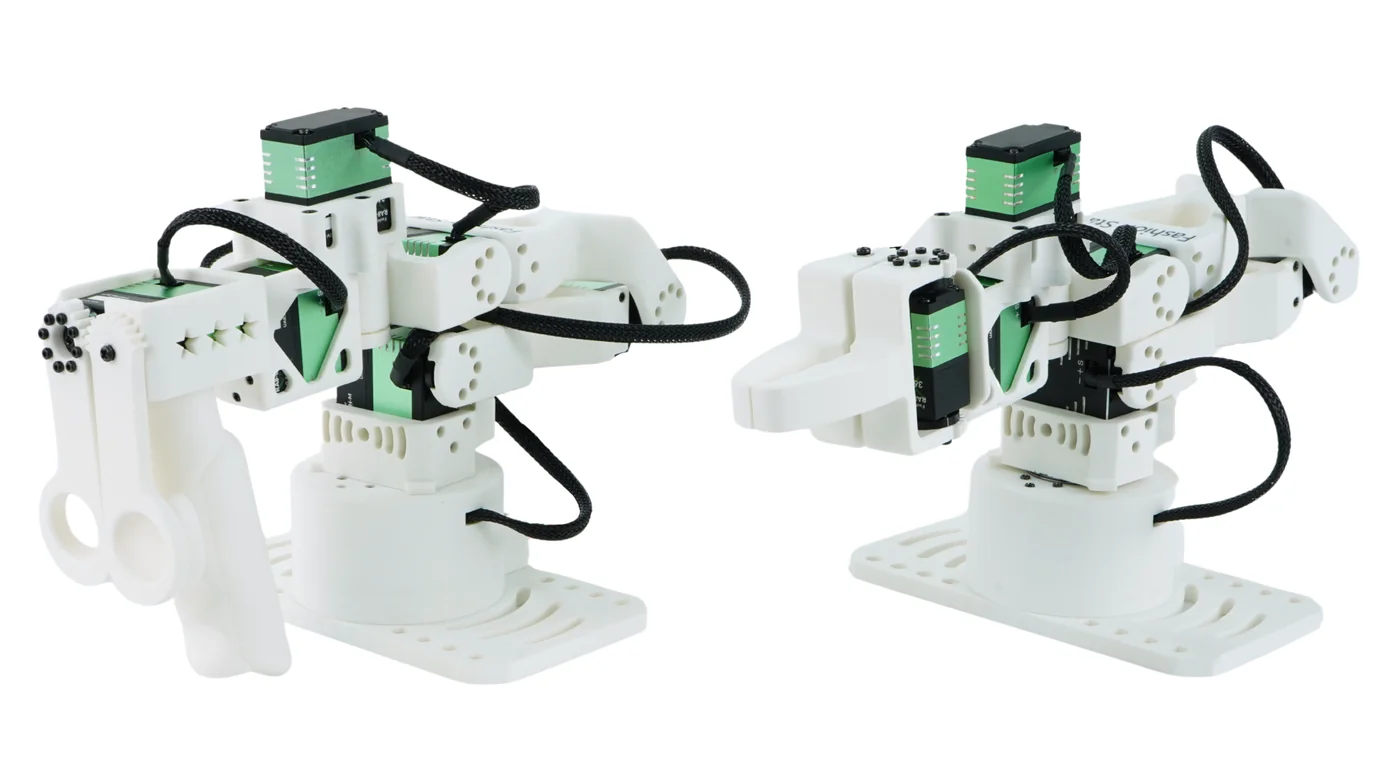
Built for robotics research, teleoperation teaching, and embodied AI data collection, we are excited to introduce our new open-source robotic arm: Star Arm 102. It is a 6+1 degree-of-freedom (DOF) leader-follower teleoperation system that lets a Leader arm remotely control a Follower arm in real time. Out of the box it supports three control paths: Python SDK, ROS2 Humble, and LeRobot, covering everything from quick testing to full AI model training.
What Is Star Arm 102
Star Arm 102 is an open-source robotic arm control project focused on teleoperation and imitation learning. It consists of two arm types: a Leader and a Follower. The operator moves the Leader arm while the Follower arm mirrors the motion in real time. This leader-follower structure works both for remote operation of real tasks and for efficiently collecting high-quality demonstration data to train AI models.
Both the design files and the control code are fully open-source. You can buy a pre-assembled unit, or download the 3D-printable models, print the structural parts yourself, source the components, and assemble it. The result is a platform that is genuinely open, low-cost, and flexible to obtain.
Key Features
- Open-source, low-cost, flexible access: design files and control code are open; buy a complete unit or 3D-print the parts and assemble it yourself.
- Sound mechanical configuration: 6 active joints plus 1 end effector, with a joint layout that satisfies the Pieper criterion for analytical inverse kinematics (IK) solving and clear teaching.
- LD model as a teleoperation leader: the Star Arm 102-LD can teleoperate FL models in the same series, and also adapt to reBot and other identical or similar configurations.
- Multi-platform compatibility: direct teleoperation via Python SDK, plus support for the ROS2, MoveIt, Gazebo, and LeRobot ecosystems.
- Full application coverage: spans data collection, simulation, model training, real-world deployment, and secondary development.
Hardware at a Glance
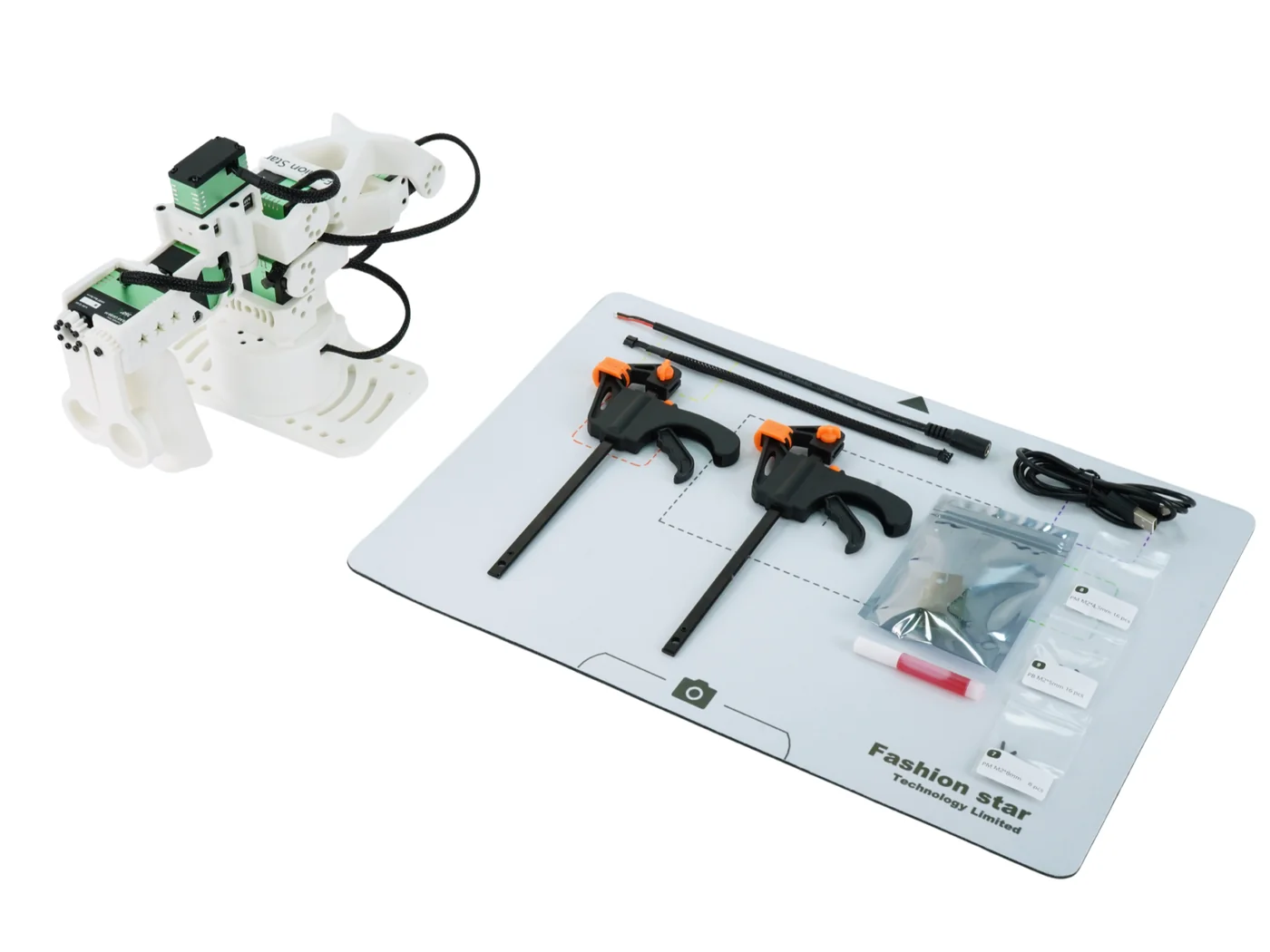
Star Arm 102 comes in two models: Star Arm 102-LD (Leader) and Star Arm 102-FL (Follower). You can review joint ranges, servo configuration, payload, weight, communication method, and ecosystem support before pairing them to fit your setup.
Three Control Methods: From Quick Start to AI Training
Star Arm 102 offers three control paths for different stages of use. Pick the one that matches your needs and experience level:
| Feature | Python SDK | ROS2 Humble | LeRobot |
|---|---|---|---|
| Learning curve | Easy | Moderate | Advanced |
| Real-time performance | High | Medium-high | Medium-high |
| Extensibility | Basic control extension | Strong system integration | AI data & training oriented |
| Best for | Quick tests, teaching, teleoperation | MoveIt planning, simulation, integration | Imitation learning, data collection, research |
Python SDK: Quick Start and Teaching
With the Python SDK you can read the Leader arm directly and control the Follower arm, which is ideal for quick testing, classroom demos, and basic teleoperation. Beginners should start here to validate the leader-follower serial connection and the teleoperation workflow.
ROS2 / MoveIt / Gazebo: Motion Planning and Integration
Using ROS2 Humble, MoveIt2, and Gazebo, you can perform motion planning, control the real arm, run simulations, and record demonstration trajectories. This path suits research teams that need system integration and simulation validation.
LeRobot: Imitation Learning and Data Collection
Connect to the LeRobot ecosystem for imitation learning, data collection, model training, and real-world deployment. It is the ideal entry point for embodied AI experiments.
Use Cases
- Robotics research and algorithm validation
- Teleoperation teaching and inverse kinematics demonstrations
- Embodied AI training data collection
- Imitation learning and policy model training
- Sim-to-real deployment and secondary development
Recommended Reading Path
- Start with Product Specifications to confirm model, payload, joint range, and power requirements.
- For assembly or structure review, open Drawings & Model Downloads and the Installation Guide.
- Beginners should start with the Python SDK to verify the Leader/Follower serial connection and teleoperation flow.
- For simulation, motion planning, or system integration, continue with ROS2.
- For data collection, imitation learning, and embodied AI experiments, read the LeRobot guide.
Get Started
For full technical specifications, assembly resources, and control tutorials (product specs, drawings and model downloads, installation guide, Python SDK / ROS2 / LeRobot tutorials, plus open-source resources and FAQ), explore the complete Star Arm 102 documentation:
👉 Read the full Star Arm 102 documentation and quick-start guide
To purchase hardware: customers outside mainland China are recommended to buy via the standalone store, while customers in mainland China can buy via Taobao. Start your open-source teleoperation and embodied AI development journey today.