Blog
Bus Servo Actuators for Automated Warehouse Equipment: A Compact Small-Actuator Control Guide
Bus Servo Actuators for Automated Warehouse Equipment: Small Mechanisms, One Coordinated Bus
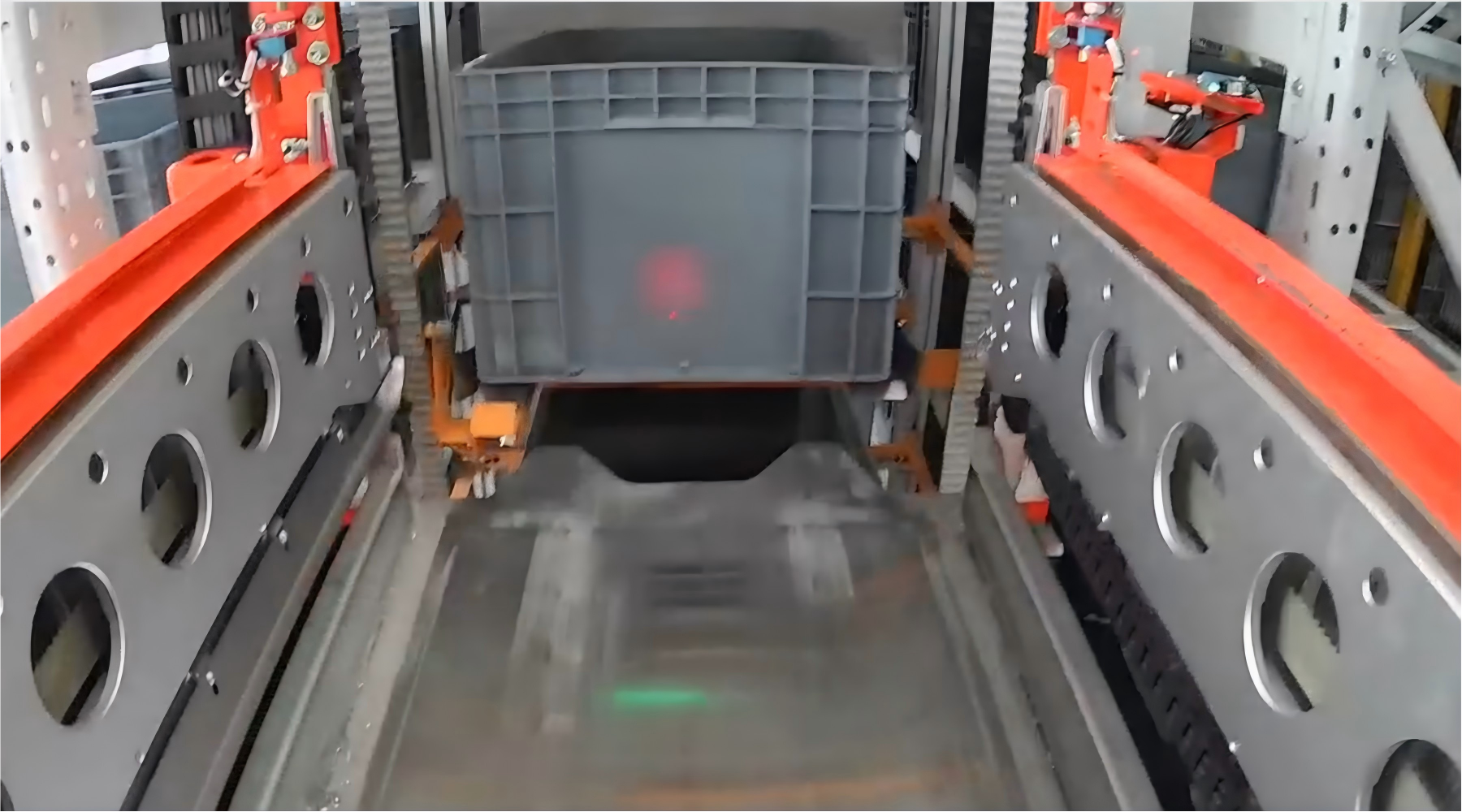
Bus servo actuators drive fork push rods, anti-drop flaps, bin-locking devices, and guidance and stop mechanisms in automated warehouse equipment. Multi-layer shuttle systems, MiniLoad storage units, and bin-handling robots are all moving toward higher density and smaller footprints, and each machine now carries more and more small actuation points.
These mechanisms perform simple moves, but they share a common set of constraints: limited installation space, frequent cycling, a large number of actuation nodes, and a control system that must confirm every mechanism has actually finished its move before the next step starts.
Fashion Star bus servo actuators pack a compact mechanism together with integrated position feedback and bus communication. Through broadcast synchronized control, status readback, and PLC integration, one bus servo actuator family can drive the small mechanisms across shuttle and bin-handling equipment.
Article Contents
Why Shuttle and Bin-Handling Equipment Needs Coordinated Small Actuators
Warehouse equipment such as multi-layer shuttles and bin-handling robots relies on a family of small actuation mechanisms that repeat simple moves thousands of times per shift. On one machine, a bus servo actuator can be applied across these mechanisms:
- Fork push rods — extend and retract the rod to push or release a bin.
- Anti-drop flaps — open and close the flap while reporting the current position.
- Bin locking — lock and release a storage bin.
- Guidance and stop mechanisms — assist bin positioning and prevent misalignment.
- Conveyor diverting — actuate a small rod or flap to switch a routing path.
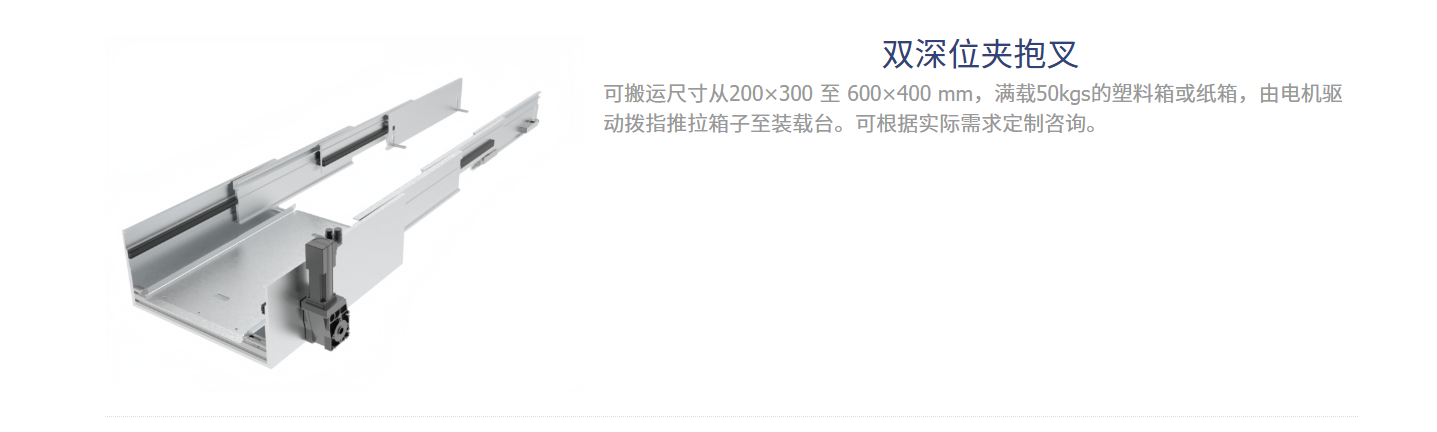
These actuation points run across the shuttle and bin-handling equipment family. The clamp forks and pusher mechanisms below — a rack-type AGV, a dual-station clamp fork, a single-deep aisle fork, and a double-deep clamp fork — all carry bins from 200 × 300 to 600 × 400 mm at up to 50 kg per station:
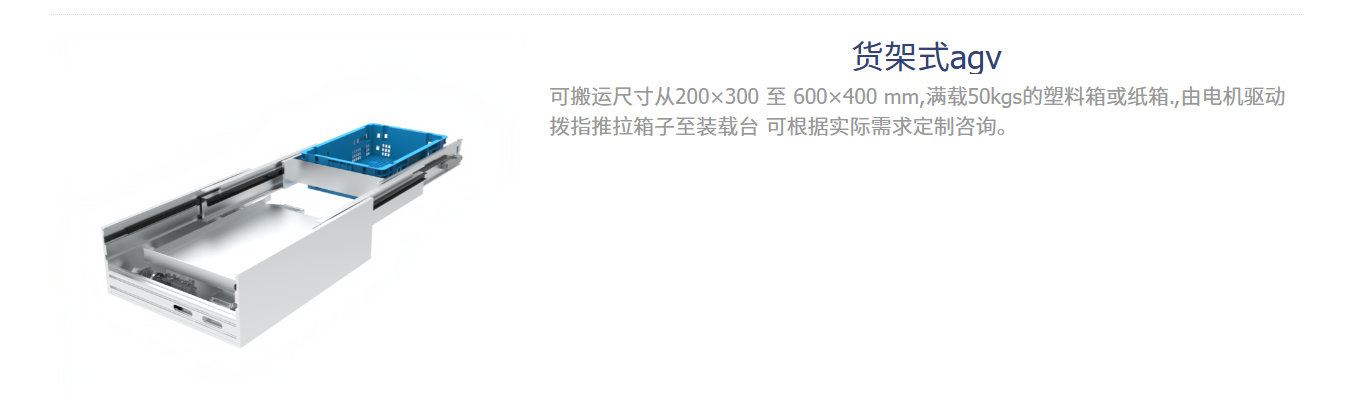
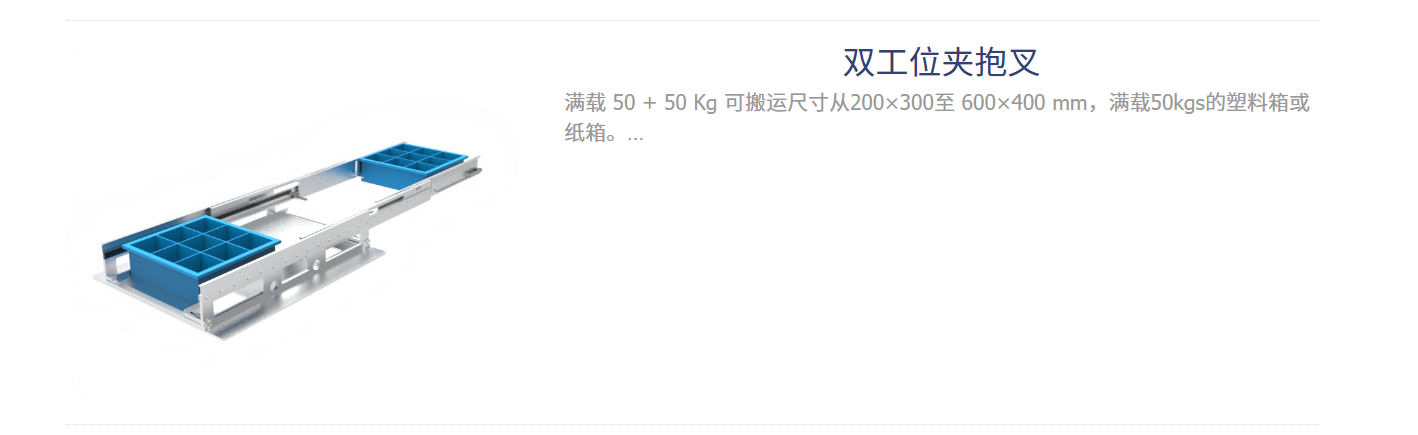
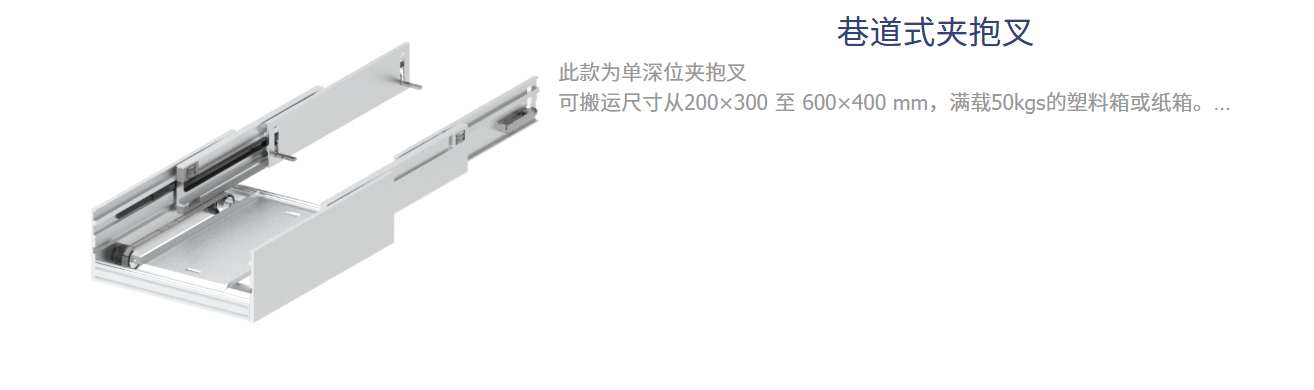
For these mechanisms, a servo does more than drive the motion. Its position feedback lets the PLC read the actual state of each actuator, so the control logic can confirm completion before advancing.
How Compact Bus Servo Actuators Fit Dense Layouts
Space inside warehouse equipment is tight. When several actuators are installed close together, the physical size of each servo directly shapes the mechanical design.
Fashion Star bus servo actuators are available in two housing sizes — 40 × 20 × 40 mm and 63 × 34 × 47 mm — with speeds from 35 to 116 rpm and dynamic torque from 17 to 50 kg·cm. The size, load, and speed of each mechanism determine which model to select.
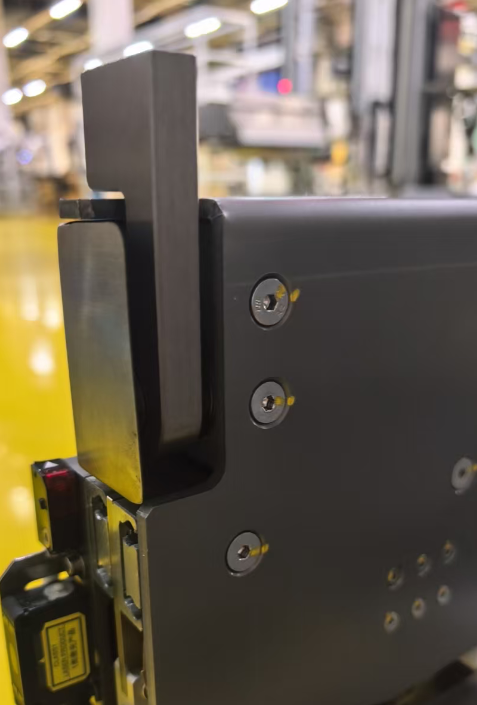
The 40 × 20 × 40 mm housing is only 20 mm wide, which suits layouts where several actuators must be grouped in a narrow space.
The servos use a brushless motor with a no-load service life of up to 2,000 hours, matching the long, high-frequency duty cycles of warehouse equipment.
Selection Parameters for Bus Servo Actuators in Warehouse Equipment
Selection starts from the mechanism. The table below summarizes the six parameters that most often drive sizing for warehouse small-actuator applications.
| Parameter | Available range / option | What it determines |
|---|---|---|
| Housing size | 40 × 20 × 40 mm / 63 × 34 × 47 mm | Installation space, actuator density |
| Speed | 35 – 116 rpm | Cycle time of the mechanism |
| Dynamic torque | 17 – 50 kg·cm | Load the actuator can drive |
| Motor type | Brushless | Service life under high-frequency use |
| Communication | Bus — UART / RS-485 (daisy-chain capable) | Wiring complexity across multiple nodes |
| Feedback | Position and status readback | Whether the PLC can confirm completion |
The two housing sizes and the 17–50 kg·cm dynamic torque range let one servo family cover light fork rods, flaps, locks, and higher-load diverting mechanisms.
From Mechanical Selection to the Control System
Once the right servo is chosen for each mechanism, the next step is connecting it to the machine control logic. Because a single shuttle or bin-handling robot may carry multiple servos, the control architecture matters as much as the mechanical fit.
Bus servo actuators change the trade-off: instead of wiring every actuator independently to the controller, the servos share a bus. This moves the design effort from “wiring each node” to “defining coordinated motion in the PLC program.”
Broadcast Synchronized Control for Multi-Actuator Coordination
A single shuttle or bin-handling device can require several servos. If each actuator connects to the controller independently, wiring and maintenance grow with every added axis. Fashion Star bus servo actuators support daisy-chaining between servos, so nodes can be connected according to the machine structure and wiring complexity is reduced.
They also support broadcast synchronized control: one command can move several servos at the same time, while the status and angle of each servo can be read back together. In warehouse equipment this supports:
- bin-locking and releasing at the same time across several storage positions;
- fork push rods and guide plates positioning in sync before a bin move;
- anti-drop flaps and stop mechanisms coordinating with the shuttle motion.
Typical control flow:
PLC sends command → multiple servos execute in sync → status readback → position confirmed → next process step
This lets multiple actuation points participate in one unified machine-control sequence.
Position and Status Readback for Process Interlocking
Traditional small actuation mechanisms use a motor paired with limit switches to detect position. For equipment with many actuation nodes, those external sensors and their wiring add up quickly.
A bus servo actuator integrates position feedback into the drive unit itself, combining drive, position detection, and communication in one device.
The control system can judge whether a mechanism has reached position based on the servo’s reported angle and running status. This reduces reliance on external position-detection components and makes condition monitoring easier for the machine.
Daisy-Chained Multi-Servo Wiring
As the number of axes grows, individual wiring becomes the hidden cost of small-actuator designs. Daisy-chaining addresses this directly.
Because servos connect in series along a shared bus, the machine builder runs one route instead of one cable per actuator. Nodes are added by extending the chain, which keeps wiring, commissioning, and later maintenance more manageable as mechanisms multiply.
Integrating Bus Servos with Mainstream PLCs
Fashion Star bus servo actuators communicate over UART and RS-485 and integrate with mainstream PLC platforms through wiring guides, serial communication settings, and function block examples. Supported platforms include:
- Siemens S7-1200 — TIA Portal v19, RS-485
- Siemens S7-200 SMART — STEP 7-MicroWIN SMART, RS-485
- Inovance H5U — AutoShop, serial & RS-485
- Inovance AM401 — InoproShop, RS-485
- Mitsubishi FX3U — GX Works2, serial & RS-485
- CODESYS / GCAN-302 — CODESYS, RS-485
See the PLC Integration Guides for wiring instructions, communication setup, and function block examples per platform.
The bus servo’s feedback and broadcast control plug into the same PLC logic that runs the warehouse equipment: the PLC reads the actual state of each mechanism and steps the sequence forward only when every servo confirms completion.
Typical Bus Servo Applications in Warehouse Equipment
Fork Push Rods
The servo extends and retracts the push rod to push or release a bin. Position feedback tells the PLC whether the rod is fully extended or retracted before the next bin is engaged.
Anti-Drop Flaps
The servo opens and closes the flap and reports the current position, so the control system can confirm the flap is closed before a bin travels over it.
Bin Locking
The servo locks and releases the bin, with status readback confirming a secure lock before the shuttle moves.
Guidance and Stop Mechanisms
Small rods or stops assist bin positioning and prevent misalignment, using servo position to confirm the stop is in place.
Conveyor Diverting
A compact rod or flap switches the routing path, with the servo reporting which path is currently selected.
Bus Servo Technical Resources
Use the relevant resource at each stage of mechanical selection, communication design, PLC programming, and commissioning.
- Fashion Star Bus Servo Series — model selection and integration support.
- PLC Integration Guides — wiring, serial settings, function blocks, and controller examples.
- Fashion Star Wiki — servo documentation, protocols, and application guides.
- Open-source SDK & examples (GitHub) — Python SDK, ROS 2, and LeRobot examples for robot and automation development.
- Fashion Star — company site and product overview.
Frequently Asked Questions
Why use a bus servo actuator instead of a motor with limit switches for warehouse actuators?
A bus servo actuator combines drive, position detection, and communication in one unit. For machines with many actuation nodes, this reduces external sensors and wiring while giving the PLC real position and status feedback.
Which servo size should I choose for dense actuator layouts?
The 40 × 20 × 40 mm housing is only 20 mm wide and suits layouts where several actuators must be grouped in a narrow space. The 63 × 34 × 47 mm housing covers higher-torque needs.
Can multiple servos move at the same time?
Yes. Broadcast synchronized control moves several servos with one command and reads back their status and angle together, which suits bin locking and coordinated multi-mechanism sequences.
How do the servos reduce wiring?
Servos daisy-chain along a shared bus, so one route replaces one cable per actuator, and nodes are added by extending the chain.
Build a Compact Bus Servo System for Warehouse Equipment
For multi-layer shuttles, MiniLoad units, and bin-handling robots, the same push rod, anti-drop, or locking mechanism is often reused across many machines. A unified bus servo approach lets you validate starting from a single actuation point, then replicate it to similar equipment — standardizing both the actuator and the control method.
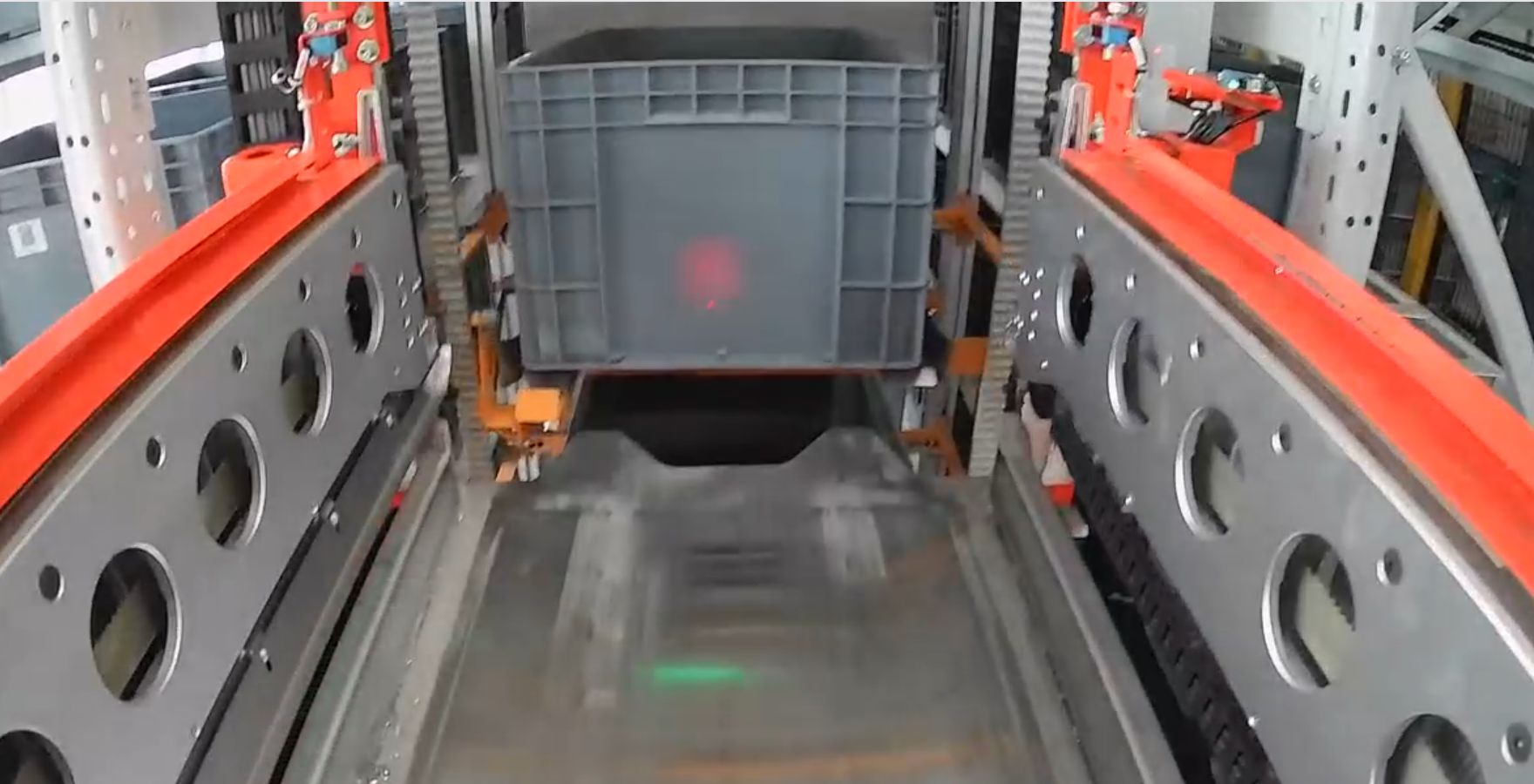
Fashion Star bus servo actuators can be selected by torque, speed, angle, and installation space, providing a compact, feedback-capable, and easily expandable bus actuation solution for the small mechanisms inside automated warehouse equipment.