Humanoid Fighting Robot Takes the Stage at World Robot Conference 2026
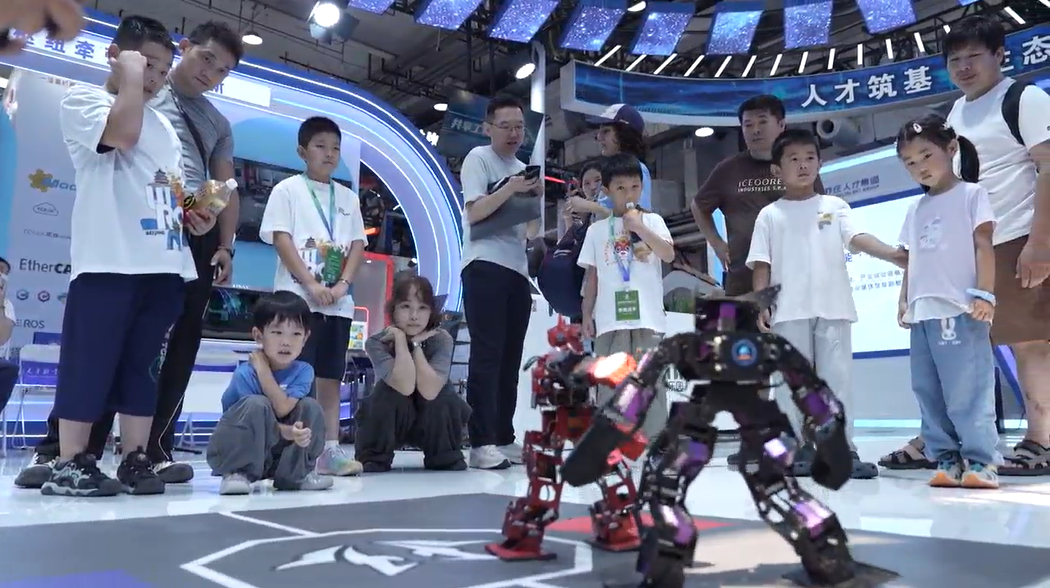
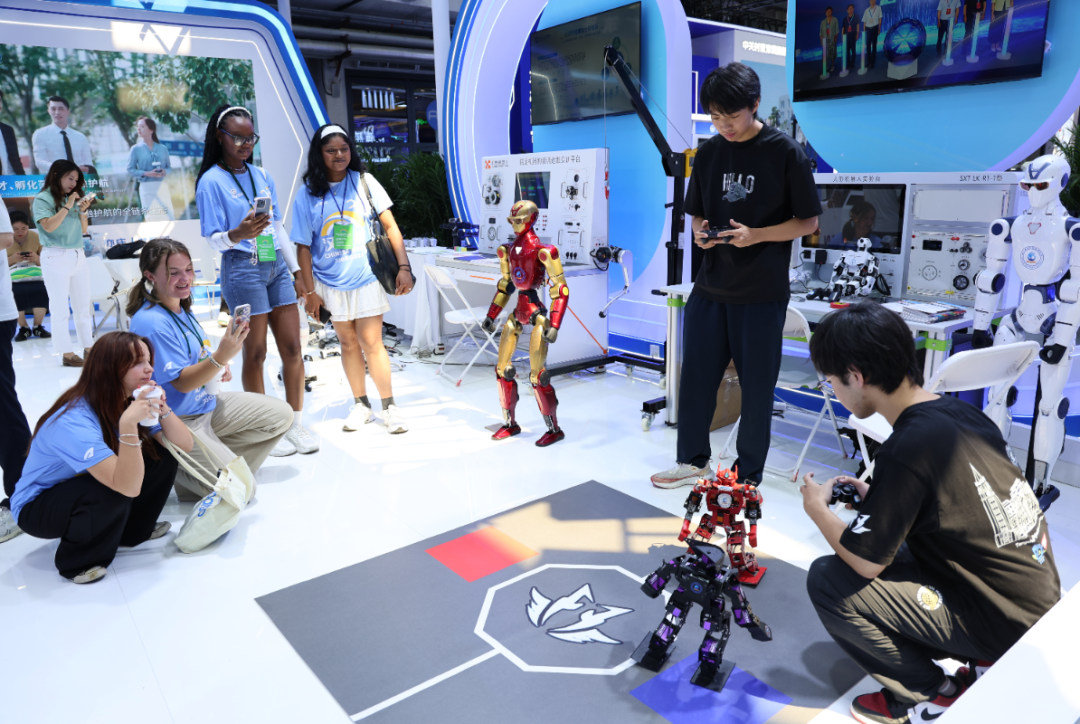
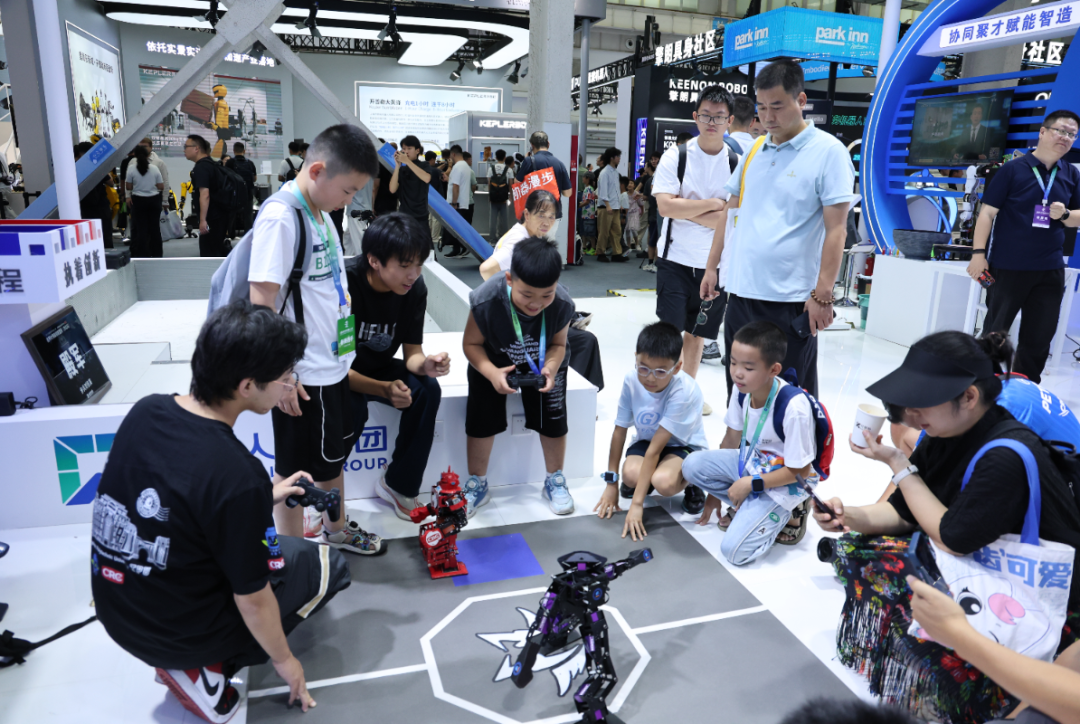
A Fashion Star humanoid fighting robot went head-to-head at the 2026 World Robot Conference (WRC) in Beijing. At Tangshan Polytechnic University’s booth in the industry–education showcase, two humanoid fighting robots clashed under the spotlight — the crisp sound of their metal frames drawing a large crowd, and one of them was Fashion Star’s own fighting robot.
Held this August in Yizhuang, Beijing, the WRC is the world’s largest and most internationally attended event in the robotics industry. Under the theme of human–robot symbiosis and the deep integration of production and demand, it brought together researchers, educators and industry players from around the world. Tangshan Polytechnic University was invited to present at the Beijing–Tianjin–Hebei Robotics Industry–Education Collaborative Development pavilion, showcasing the results of its industry–education programs.
Fostering a New Model of Industry–Education Collaboration
The pavilion centered on a new model for cultivating robotics talent through industry–education integration. Built on a “five-in-one” approach, it works to connect the education chain, the talent chain, the industry chain and the innovation chain — where industry poses the questions and universities train the answers.
In this setting, the Fashion Star humanoid fighting robot appeared as one of the tangible outcomes of collaboration between schools and enterprises.
Fashion Star Fighting Robot Lights Up the Booth
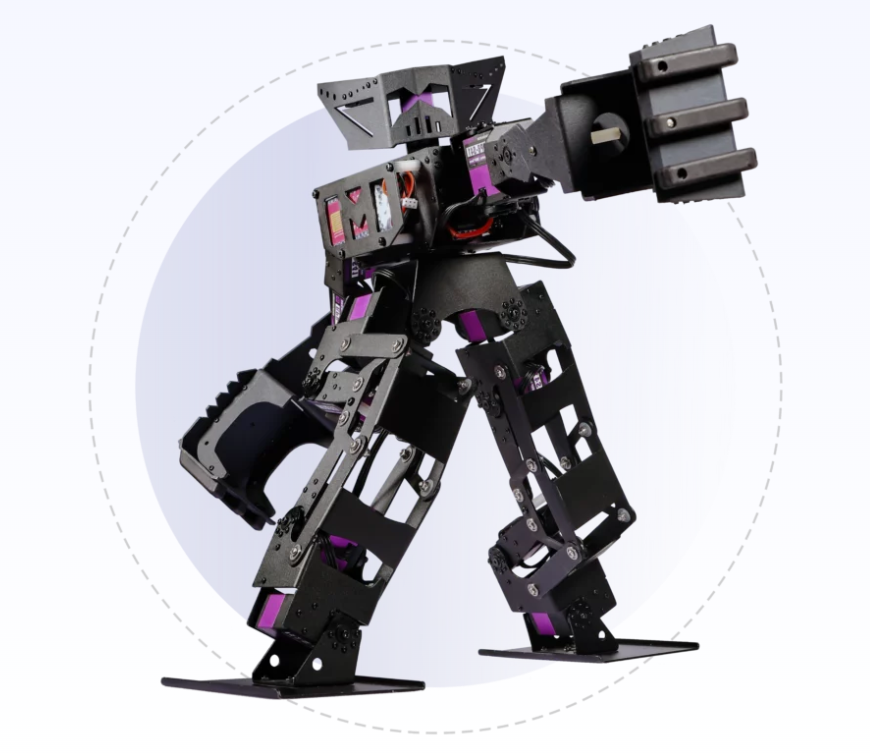
Fashion Star’s fighting robot is a professional humanoid robot built for competitive combat. It features a full aluminium-alloy frame configured to international fighting-robot competition rules, and is driven by 15 distributed serial bus servos with up to 45 kg·cm of torque (model RP8-S41), giving every joint the power needed for real bouts.
Designed to be approachable even for first-time users, the robot offers:
Multi-channel serial control — servos are daisy-chained, keeping wiring clean and flexible around the joints;
Automatic servo ID assignment — IDs are recognized automatically on power-up, so there is no need to configure each servo before assembly, and replacements are simple;
Feedback-based motion editing — PC and mobile visual motion editors read back real servo angles, making action programming intuitive;
Multiple control options — mobile app, gamepad and PC host software, with button mapping and action-by-action testing support;
Rich fighting moves — forward and backward motion, turning, side-stepping, punching and standing up from a fall, meeting the requirements of humanoid fighting-robot competitions;
Open for further development — the control board exposes a UART port and is compatible with Arduino, Micro:bit and other boards, serving both teaching and maker projects.
From Arena to Classroom: More Than Just Fighting
At first glance, a humanoid fighting robot may look like pure entertainment. In fact, it is a tightly integrated teaching platform that combines mechanical structure, servo actuation, communication control and motion editing.
On the WRC stage, the live showdown let visitors experience the excitement of robot combat first-hand. Back in the classroom, the same humanoid fighting robot helps students understand the full journey of building a humanoid robot — from assembling and tuning joint servos, to configuring serial-bus communication, to programming feedback-based motion sequences.
This is exactly the capability chain valued by university robot clubs, competition teams and vocational training programs. Tangshan Polytechnic University’s robot team — which develops its own robots from concept design through structure and control-system development on industry-collaboration platforms, and has earned awards including a RoboMaster University League accolade and multiple ROBOTAC prizes — uses fighting robots as a practical platform for building students’ systems-engineering skills.
Real Hardware for Real Robotics Education
Robotics competitions and training programs span mechanical design, actuator control, communication protocols, algorithm development and full-system integration. For university teams, working with real hardware is the most direct way to understand how a robot system goes from design to operation.
Fashion Star’s serial bus servos, humanoid fighting robots and robotic arms are used by university laboratories, robot competition teams and R&D developers to support competitions, research prototyping and teaching. We look forward to working with more universities, clubs and research teams — bringing real hardware into more classrooms and arenas, and exploring what industry–education collaboration can achieve next.
Explore More Fashion Star Resources
GitHub — servodevelop: open-source SDKs, ROS 2 packages and demo code for our robots.
Fashion Star Wiki: product documentation, tutorials and getting-started guides for serial bus servos and robot arms.