Servo Selection Guide: Stall Torque, Dynamic Torque, and Rated Torque
This article explains the three most important torque parameters for servo selection by combining the basic force relationship of torque with the characteristic curves of a servo:
- Max Stall Torque: the maximum output torque when the output shaft is stalled.
- Max Dynamic Torque: the maximum output torque with which the servo can move a load. This is not a continuous-operation rating.
- Rated Torque (Continuous): the output torque the servo can sustain continuously under the specified operating conditions.
What Is Servo Torque?
For a servo, the horn, rocker arm, or linkage on the output shaft forms a moment around the center of the output shaft when it carries a load. The most basic relationship is:
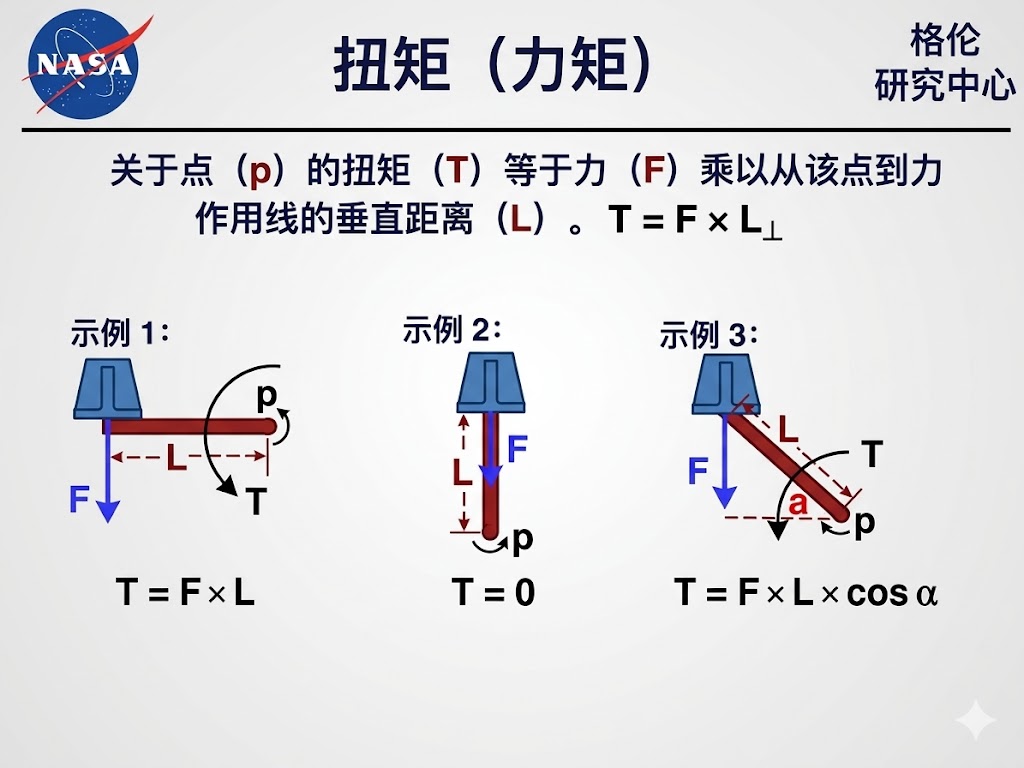
The figure shows three key points directly:
- A heavier load requires more torque.
- A longer moment arm also requires more torque.
- When the rocker-arm angle changes, the effective moment arm also changes. Therefore, the same load can require different torque from the servo at different postures.
Three Core Torque Parameters
Stall Torque
Max Stall Torque is the maximum output torque when the output shaft is stalled (zero output speed). For a load acting through a moment arm, torque is calculated as T = F × L.
From a selection perspective: it answers whether this servo can theoretically withstand the limit load, with factors such as motion inertia considered.
Note
Stall torque is not a recommended long-term operating point. When a servo is close to stall, current rises rapidly and obvious heating occurs, so it is not suitable for long continuous operation.
Dynamic Torque
In this article, Max Dynamic Torque refers to the maximum output torque with which a servo can move the load from 0° to 90° under the moment-arm condition of T = F × L. It describes the ability to move the load, not the ability to sustain that torque continuously.
From a selection perspective: this parameter indicates whether this servo can truly lift a given load and complete the motion.
Tip
If the servo moves infrequently, this value can be used as a selection reference.
Rated Torque
Rated Torque (Continuous) is the output torque a servo can sustain continuously under the specified operating conditions.
It is a safer engineering operating region. For robot joints, robotic arms, Pan-Tilt systems, grippers, and other mechanisms that need repeated motion or long operating time, rated torque is often more important than stall torque.
From a selection perspective:
- It corresponds to the load level that the servo can withstand for a long time;
- Within this range, speed, efficiency, temperature rise, and service life are more balanced;
- When viewed on the
T-Ncurve, rated torque is usually closer to the higher-efficiency region, rather than the extreme region near stall.
Understanding These Three Parameters from the Servo Curve
The following uses the T-N characteristic curve of a 45 kg-class servo as an example:
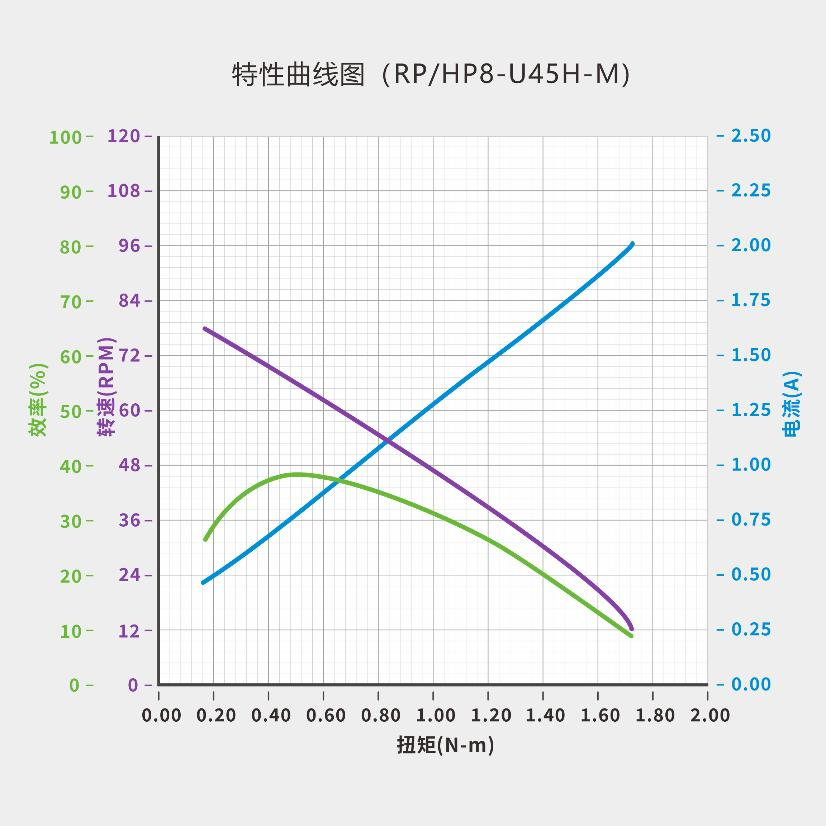
- Max Stall Torque: 3.92 N·m (40 kg·cm)
- Max Dynamic Torque: 1.50 N·m (15.3 kg·cm)
- Rated Torque (Continuous): 0.49 N·m (4.95 kg·cm)
In addition to the three common specifications above, the overload curve is also recommended as a reference during selection. It indicates how long a servo can output a certain torque before entering overload.
Again, the following uses the overload curve of a 45 kg-class servo as an example:
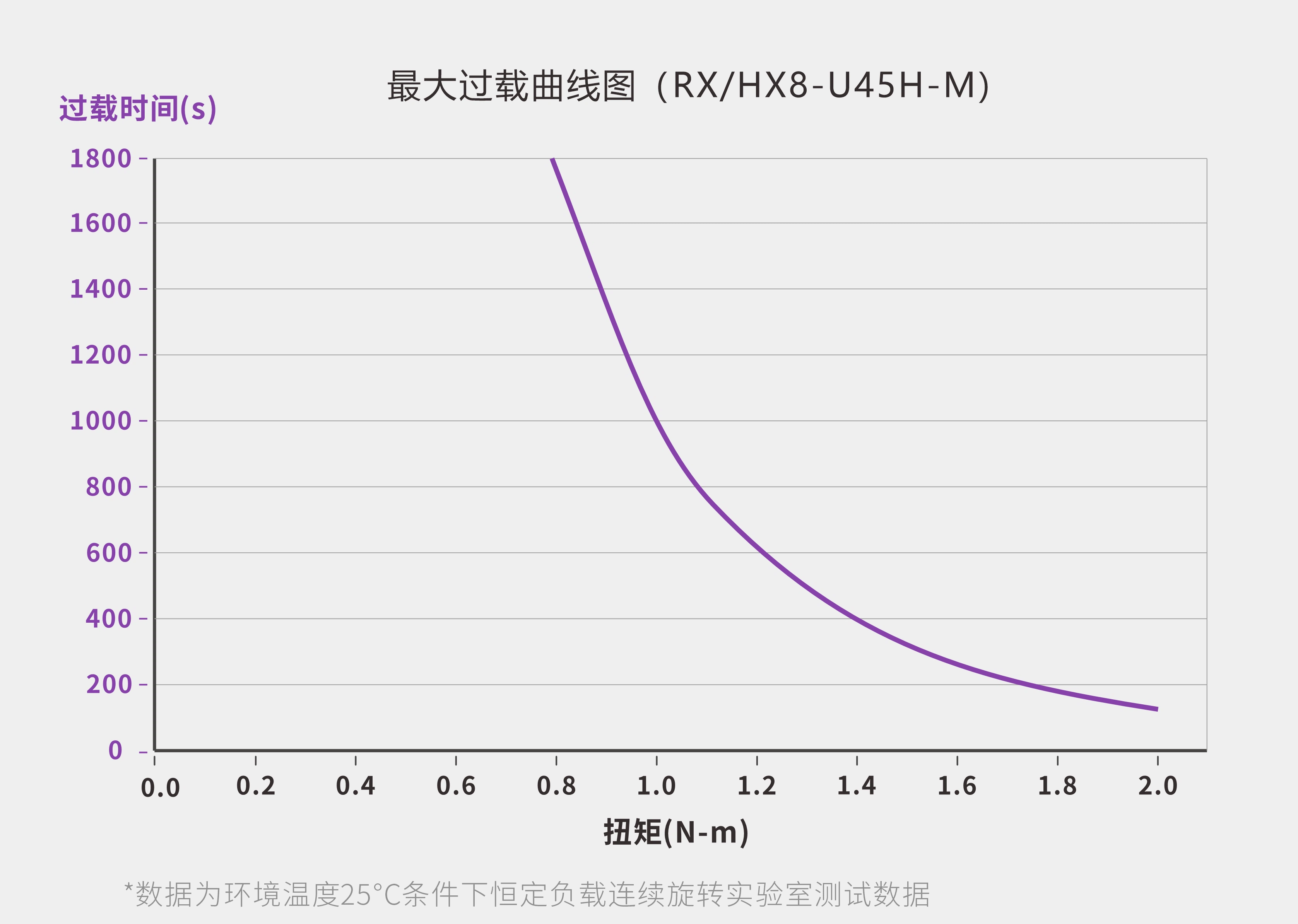
- If the servo operates under a load of 1.0 N·m (10.2 kg·cm), it will enter overload after about 1,000 seconds.
Common Model Torque Comparison Table
The table below summarizes common servo model series so that the three torque parameters can be compared quickly at the series level.
| Series Category | Max Stall Torque | Max Dynamic Torque | Rated Torque (Continuous) |
|---|---|---|---|
| Brushless / 12 kg | 12 kg·cm | 5.6 kg·cm | 1.73 kg·cm |
| Coreless / 15 kg | 15 kg·cm | 6 kg·cm | 1.8 kg·cm |
| Brushed / 25 kg | 25 kg·cm | 9 kg·cm | 3.4 kg·cm |
| Brushed / 35 kg | 35 kg·cm | 13 kg·cm | 5.5 kg·cm |
| Brushless / 45 kg | 40 kg·cm | 15.3 kg·cm | 4.95 kg·cm |
| Brushless / 26 kg | 26 kg·cm | 12 kg·cm | 4.5 kg·cm |
| Brushless / 28 kg | 28 kg·cm | 12 kg·cm | 4.5 kg·cm |
| Brushless / 50 kg | 50 kg·cm | 23 kg·cm | 9 kg·cm |
| Brushless / 100 kg | 100 kg·cm | 50 kg·cm | 32 kg·cm |
Tip
The table above is intended for quick series-level selection. For formal design, continue reading the UART bus servo datasheet and evaluate voltage, the T-N curve, the overload curve, and the actual moment-arm length together.