Star Arm 102 Setup & Integration Documentation





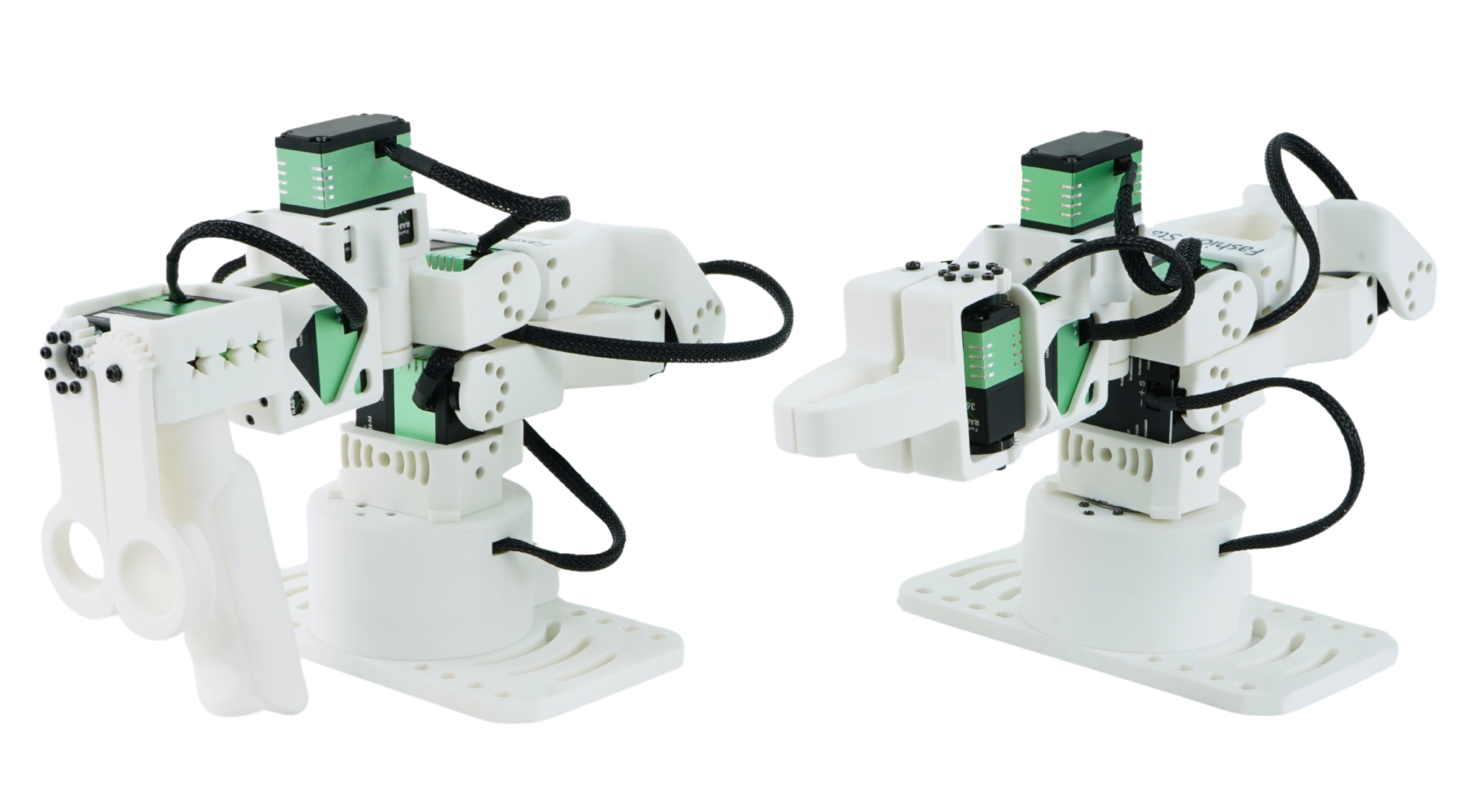
→ Learn more about the full Star Arm 102 series
Project Introduction
The Star Arm 102 Robot Arm is a 6+1 DOF robotic arm teleoperation control project. It supports real-time remote control of a Follower robotic arm through a Leader robotic arm. The project provides three control methods: Python SDK, ROS2 Humble, and LeRobot. It is suitable for robotics research, teleoperation teaching, AI training data collection, and embodied AI application development.
To purchase the hardware, use the following channels:
- Independent Store: recommended for users outside mainland China.
- Taobao: recommended for users in mainland China.
Quick Entry
-
View the joint ranges, servo configurations, payload, weight, communication method, and ecosystem support for Star Arm 102-LD and Star Arm 102-FL.
-
Download local engineering drawings or open MakerWorld to obtain 3D printing models for structure review, reproduction, and assembly preparation.
-
Learn the current assembly-resource status, pre-assembly preparation, common tools, and follow-up checks.
-
Use the Python SDK to directly read the Leader robotic arm and control the Follower robotic arm. Suitable for quick testing, teaching demonstrations, and basic teleoperation.
-
Use ROS2 Humble, MoveIt2, and Gazebo for motion planning, real robotic arm control, simulation, and teaching trajectory recording.
-
Connect to the LeRobot ecosystem for imitation learning, data collection, model training, and physical deployment workflows.
-
Open the web-based host computer interface for teleoperation, trajectory recording, zero-position setup, parameter restoration, and servo configuration.
-
View the GitHub repository, hardware resources, external ecosystem links, and common troubleshooting recommendations.
Core Features
- Open source, low cost, and flexible to obtain: design resources and control code are open. You can purchase a preassembled unit or print the structural parts and purchase components for self-assembly.
- Scientifically designed arm configuration: 6 active joints plus 1 end effector. The joint configuration satisfies the Pieper criterion, making analytical inverse kinematics easier to solve and teach.
- LD model suitable as a teleoperation leader: Star Arm 102-LD can teleoperate the FL model in the same series, and can also adapt to reBot and other robotic arms with the same or similar configurations.
- Multi-platform compatibility: supports direct teleoperation through Python SDK and is compatible with ROS2, MoveIt, Gazebo, and the LeRobot ecosystem.
- Complete application workflow coverage: supports data collection, simulation, model training, physical deployment, and secondary development verification.
Control Method Comparison
| Feature | Python SDK | ROS2 Humble | LeRobot |
|---|---|---|---|
| Getting-started difficulty | Easy | Medium | Advanced |
| Real-time performance | High | Medium-high | Medium-high |
| Extensibility | Basic control extension | Strong system integration capability | Imitation learning, data collection, and research |
| Application scenarios | Quick testing, teaching, teleoperation | MoveIt planning, simulation, robot system integration | Imitation learning, data collection, research |
| Recommended entry | Python SDK | ROS2 | LeRobot |
Hardware Resources
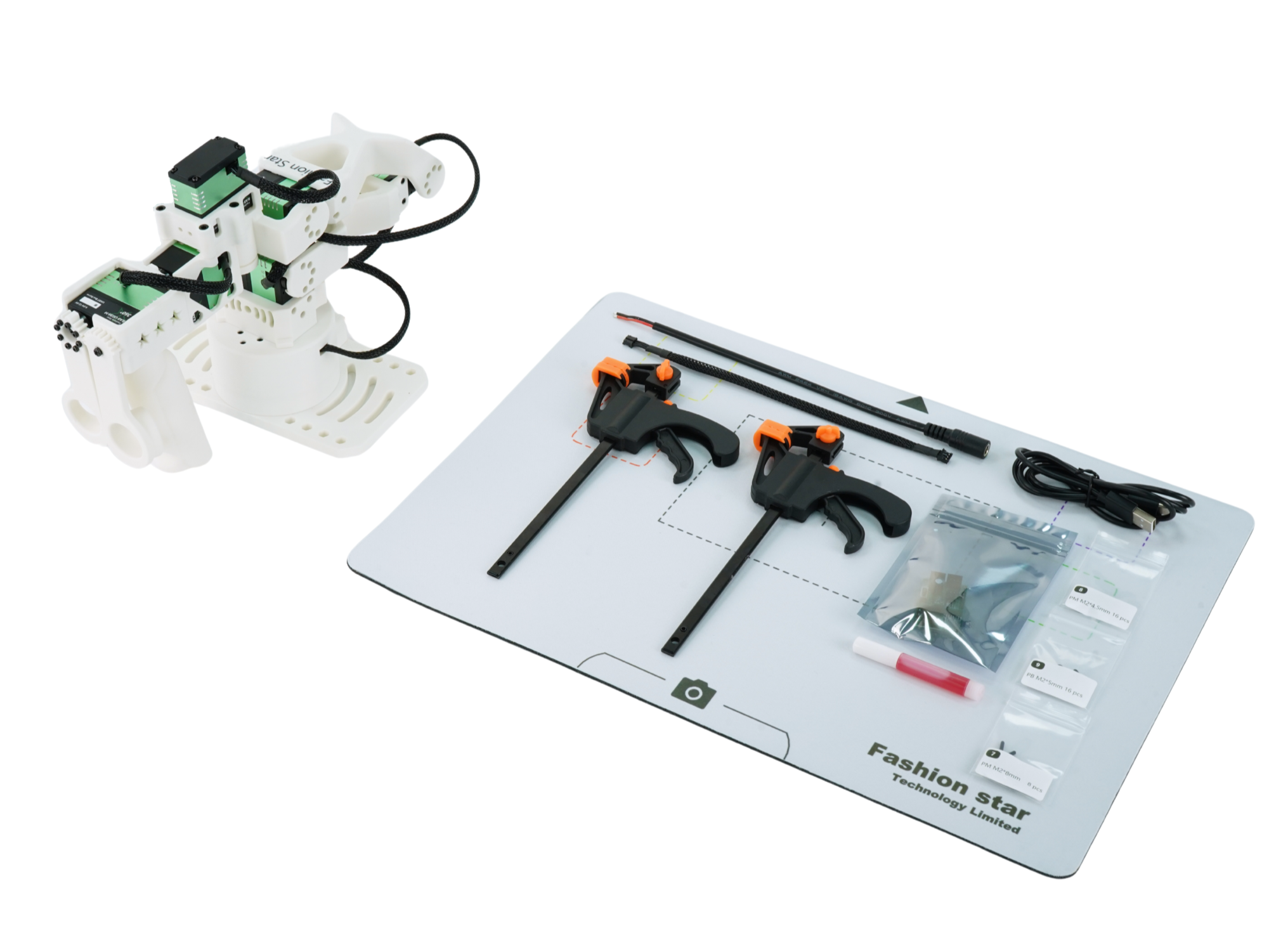
- Product Specifications: view LD/FL model specifications, joint ranges, servo configurations, and accessory list.
- Drawings and Model Downloads: view engineering drawings, local files, and the MakerWorld model entry.
- Assembly Guide: view pre-assembly preparation, resource status, and safety check recommendations.
- GitHub Repository: view the latest code, hardware directory, and open-source resources.
- MakerWorld Model Page: obtain 3D printing model resources.
Recommended Reading Path
- Read Product Specifications first to confirm the model, payload, joint ranges, and power specifications.
- If you need to assemble or inspect the structure, open Drawings and Model Downloads and Assembly Guide.
- Beginners should start with Python SDK to confirm the serial port connection and teleoperation workflow between Leader and Follower.
- For simulation, motion planning, or system integration, continue with ROS2.
- For data collection, imitation learning, and embodied AI experiments, read LeRobot.