Differences Between Single-Shaft, Dual-Shaft, and D-Shaft Servo Models and Selection Recommendations
1. Servo Naming Rules
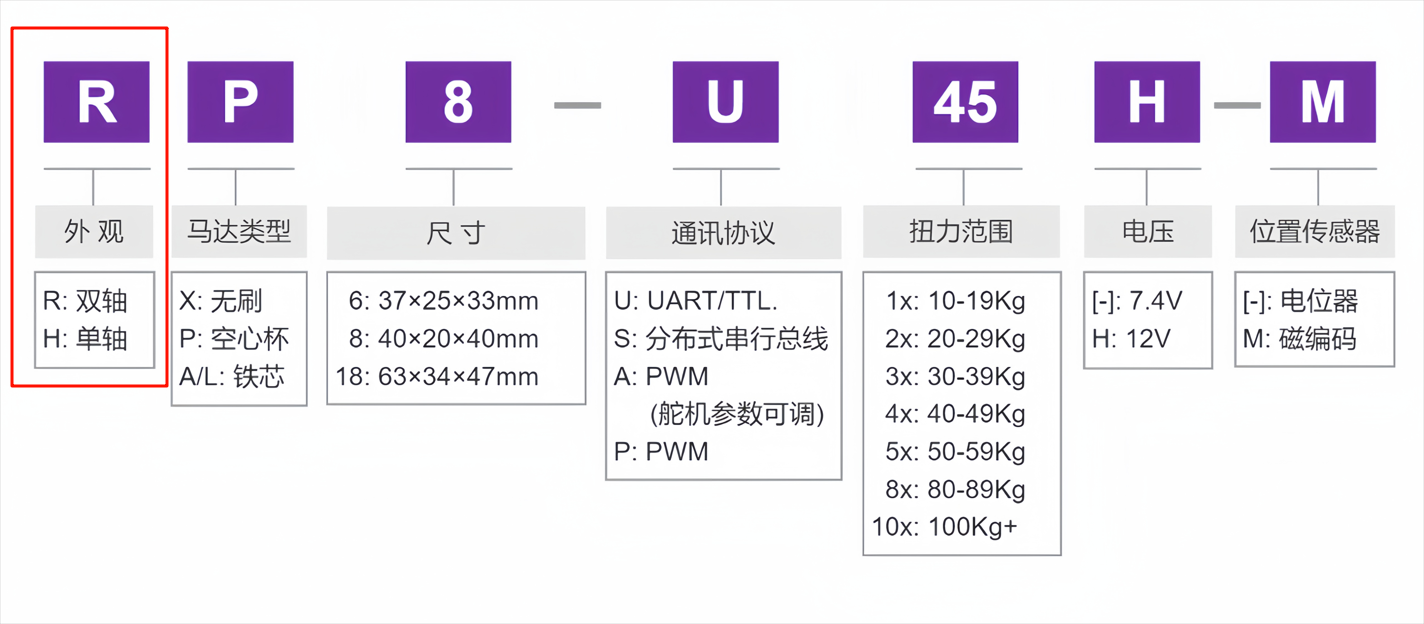
2. Core Structural Differences
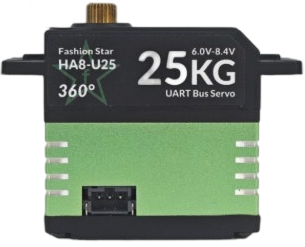
2.1.1 Single-Shaft Servo (HA8-U25)
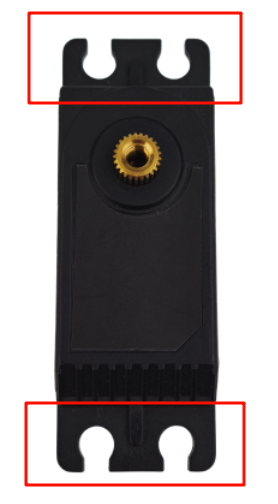
The servo has only one output shaft. This is the core component through which the servo provides rotational torque. The servo housing usually provides mounting ears on only one side for fixing the servo itself.
| Single-Shaft Servo (HA8-U25) | Bracket Mounting Holes |
|---|---|
 |
 |
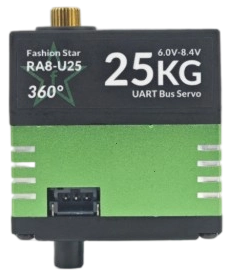
2.1.2 Dual-Shaft Servo (RA8-U25)
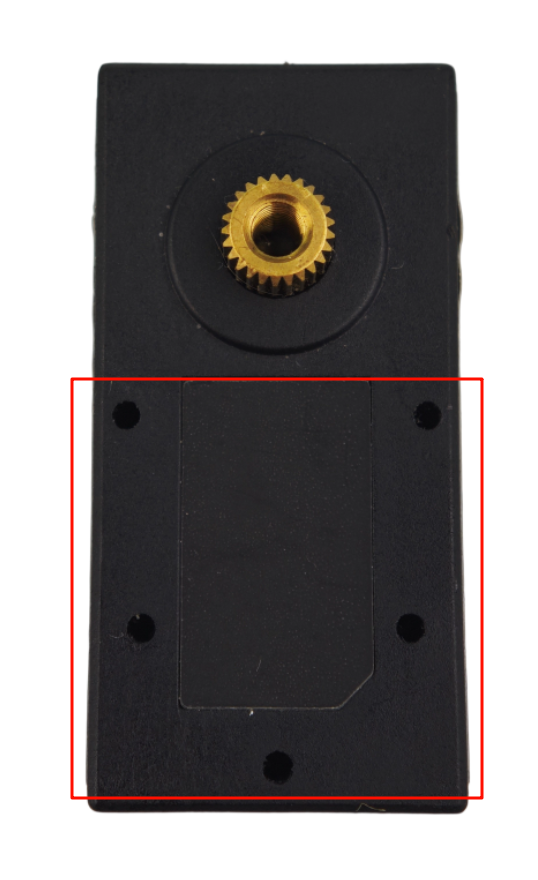
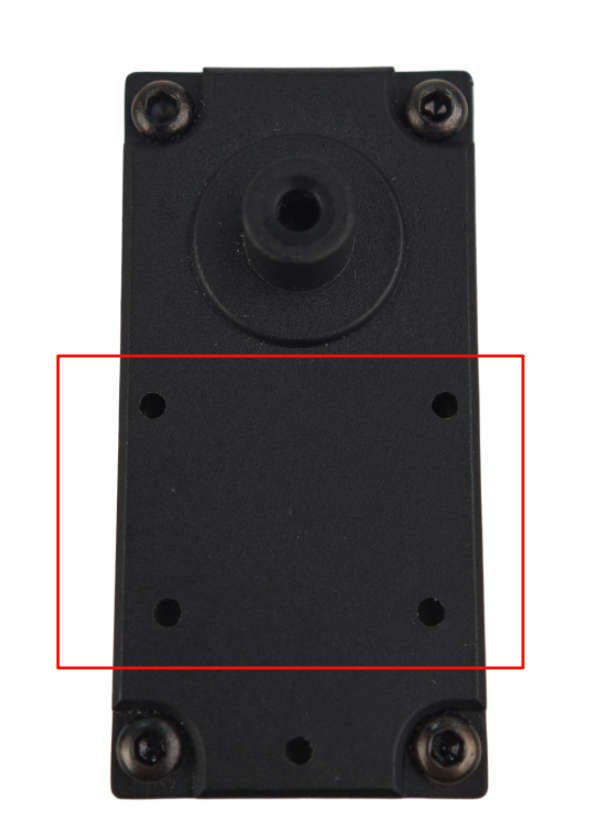
The servo has an output shaft and a support shaft. Mounting holes are provided on both sides of the servo housing for fixing the servo itself. The support shaft usually does not transmit torque; it mainly provides support and positioning.
| Dual-Shaft Servo (RA8-U25) | Bracket Mounting Holes (Top) | Bracket Mounting Holes (Bottom) |
|---|---|---|
 |
 |
 |
2.1.3 D-Shaft Servo (HX8-U29H-M | RX8-U29H-M)
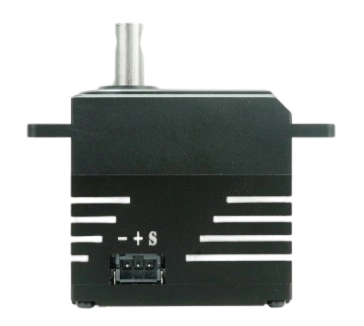
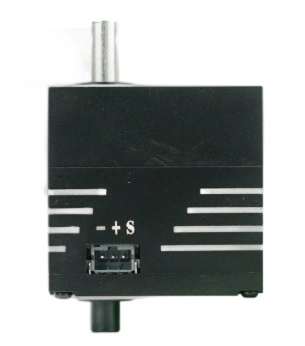
The output shaft of a D-shaft servo is a D-shaped output shaft. The mounting holes on our D-shaft servo models provide both dual-shaft and single-shaft mounting-hole layouts.
| D-Shaft Servo (HX8-U29H-M) | D-Shaft Servo (RX8-U29H-M) |
|---|---|
 |
 |
3. Selection and Installation Recommendations
3.1.1 Single-Shaft Servo (H)
The core feature is single-side mounting. The structure is simple and suitable for space-constrained applications. Installation requirement: use a single-side support component, such as an L-shaped bracket, to firmly fix the servo housing.
3.1.2 Dual-Shaft Servo (R)
The core feature is dual-side mounting. Installation requirement: it is commonly used with a U-shaped bracket. The two arms of the bracket are fixed to the two support shafts of the servo, forming a stable support structure.
3.1.3 D-Shaft Servo
The core feature is the D-shaped output shaft. Installation requirement: the D-shaft output end must be used with a coupling that has a matching D-shaped hole to connect the load. The support structure, whether single-side or dual-side, should still be selected according to load, space, and rigidity requirements, following the installation principles for H-type or R-type servo models.
Select the appropriate servo type according to your project use case and installation conditions, and pair it with the corresponding structural bracket.